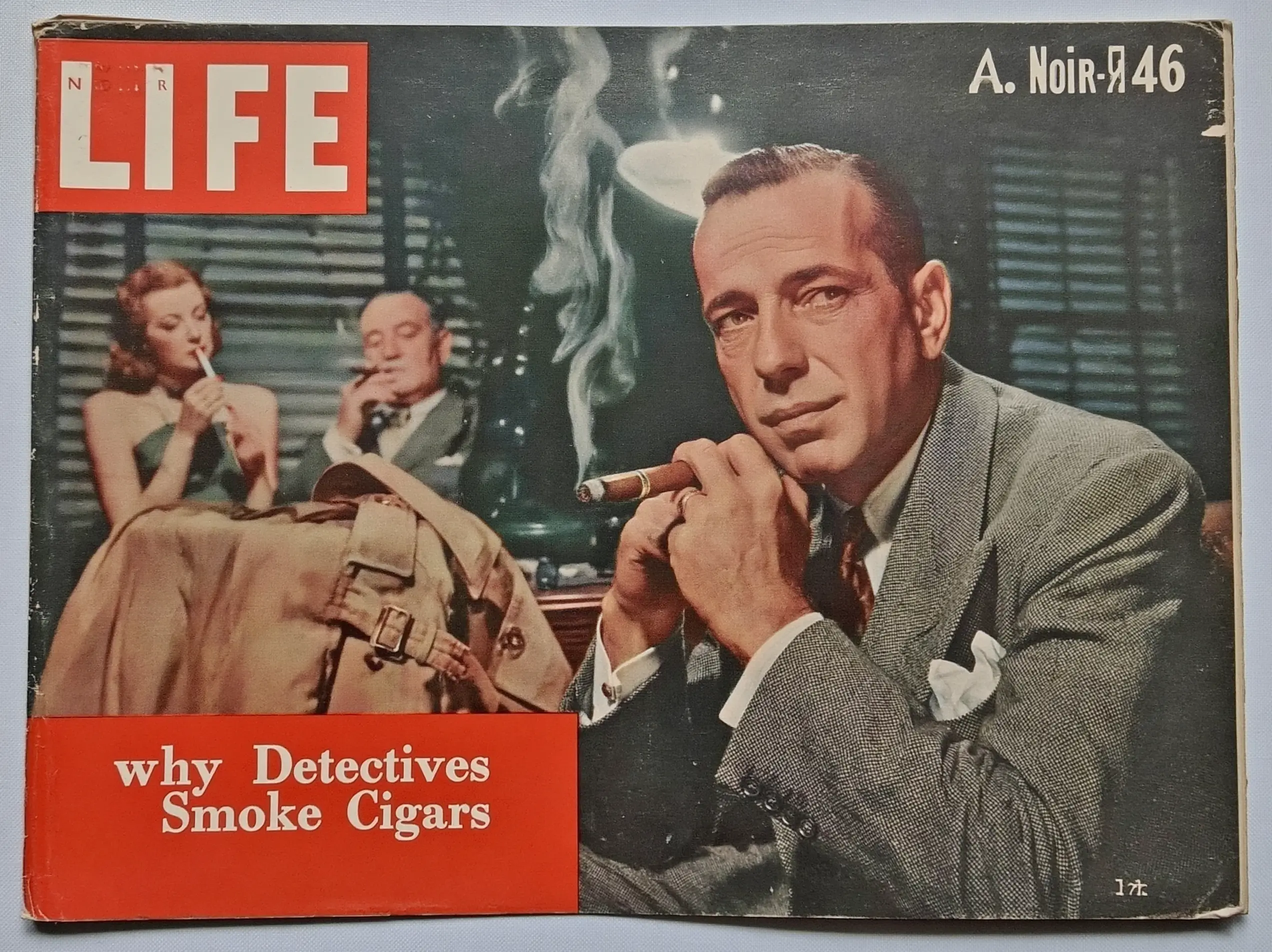
The Cigar Was the Armor
Why every film noir detective smoked cigars — and what it actually meant.
They didn't give Humphrey Bogart a vape pen.
They didn't put a cigarette in Sydney Greenstreet's fat, patient hand.
There's a reason for that.
A young woman told me last week that she loved those old films because they were so stylish.
I didn't argue.
She wasn't wrong about the style.
She just had the timeline backwards.
Those films weren't inventing anything. They were recording it. They sent a camera crew into the world I was already living in and pointed it at the parts they recognized. The shadows. The rain-slicked streets. The men with long memories and short patience.
And the cigars.
Always the cigars.
"The cigarette was what you lit when your nerves were showing. The cigar was what you lit when they weren't."
— Detective WatsonFirst Clue: The Pause That Wins the Room
A man with a cigar in 1947 didn't need to raise his voice.
He didn't need to threaten. Didn't need to explain himself. Didn't need to fill the silence with reassurance.
He let it burn.
Watch any interrogation scene from that era. Watch what the investigator does when someone tries to rattle him. He doesn't reach for a weapon. He doesn't stand up straight. He picks up his cigar, takes a long slow draw, and lets the silence do the heavy lifting.
That pause was the whole answer.
It said: I've been in rooms like this before. You're not the most interesting problem I've had today. Possibly not even the most interesting problem I've had this hour.
The woman across the room always understood this before anyone else did. She'd stop running her angle and just watch the man holding the cigar. She'd already done the math. He had too.
The cigarette never had that kind of patience. The cigarette was what you lit when your nerves were showing.
The cigar was what you lit when they weren't.
Second Clue: What the Maltese Falcon Was Actually Saying
The Maltese Falcon is a film about a black bird.
It's also a film about a man who never once loses his composure — and the people desperately trying to make him lose it.
Brigid O'Shaughnessy walked into Sam Spade's office with a story that changed three times before she sat down. She was talented. She was dangerous. She was also negotiating with someone who had already decided how it would end before she opened her mouth.
That kind of patience doesn't come from youth.
It comes from having held a lot of burning things and waiting for the truth to rise through the smoke.
Sydney Greenstreet understood this better than anyone. Three hundred pounds of patience wrapped in silk, cigar always present, always unhurried — because a man who controls the room doesn't need to move quickly in it.
The filmmakers didn't put that cigar in his hand by accident.
In film, every object is chosen. Nothing lands on screen by accident. That cigar was character testimony. It said: this man has already thought further ahead than you have.
"The cigarette was the weapon she used. The cigar was the armor he wore."
— Detective WatsonThird Clue: Her Cigarette. His Cigar. Two Different Stories.
The femme fatale smoked cigarettes.
This was not coincidence.
The cigarette was fast, impulsive, a little desperate — perfect for a woman whose plan depended on someone else making a mistake before the ash ran out. She needed events to move. She needed the room to react.
The cigar was slow, deliberate, expensive — perfect for a man who had already made his decisions and was waiting for the world to catch up.
When she lit a cigarette across the room, it meant: something is about to happen.
When the detective reached for a cigar, it meant: something has already been decided.
You could map the entire power structure of a 1940s noir screenplay just by watching who was smoking what.
Double Indemnity. Laura. Out of the Past.
The cigarette was the weapon she used.
The cigar was the armor he wore.
Fourth Clue: Why That Era Chose Tobacco
There were a hundred ways a man could signal authority in 1947.
Money. Size. Position. The implied threat.
But all of those required something from the other person — their fear, their recognition, their cooperation.
The cigar required nothing.
You didn't need the room's permission to light one. In a room full of nervous men with uncertain futures, a man who took the time to properly light a cigar was making an announcement without making a sound.
The announcement was simple: I intend to be here awhile.
Every woman in those rooms understood this instinctively. She wasn't watching the man pacing near the door. She was watching the one who wasn't moving. The still ones were always more interesting. The still ones were always more dangerous.
The cigar was a three-inch summary of a man's entire worldview.
Some men couldn't afford to smoke them. Some smoked them anyway.
Those were the ones worth watching.
"The cigar didn't have to be present to cast a shadow. That's how you know it was never just a prop."
— Detective WatsonFifth Clue: Why the Cigarette Died and the Cigar Didn't
By the time neo-noir arrived — Chinatown, Blade Runner, L.A. Confidential — the cigarette was already in trouble.
Evelyn Mulwray could tell you the whole story from Chinatown, if you caught her in a mood to talk. She understood better than most that some things from that era didn't survive the translation into the new world. The cigarette was one of them. The culture moved. The health conversation started. The cigarette began to carry different signals — a man who couldn't quit something that was killing him.
That's not authority. That's a liability.
But the cigar survived.
Because the cigar was never about the smoking.
It was about the pause. The patience. The quiet confidence of a man who had seen enough of the world to stop rushing through it.
Jake Gittes had it. The neo-noir detectives who never lit one still moved like they were considering it.
The cigar didn't have to be present to cast a shadow.
That's how you know it was never just a prop.
Case Closed
Those films weren't creating a mythology.
They were writing it down before someone forgot.
I've been in those rooms. I know what it feels like when the light hits the smoke at the right angle and the whole conversation changes.
The filmmakers knew it too.
They just spelled it out for people who weren't there.
I was there.
Still am.
- The cigar was patience made visible. In 1947, the man who let it burn controlled the room without raising a finger.
- In the Maltese Falcon, the cigar wasn't decoration — it was character testimony. Sydney Greenstreet's cigar said: I've already thought further ahead than you have.
- The femme fatale smoked cigarettes because her plan needed events to move. The detective smoked cigars because his decisions were already made.
- The cigar required nothing from the room. No fear, no recognition, no cooperation. That's what made it authority rather than performance.
- The cigarette died with the era that needed it. The cigar survived because it was never about the smoking — it was about the pause.
"The men worth watching always dressed the part."
Enter the Smoulder Shop →Until next time… I'm Detective Watson.
Noir Cigar™ — Lighting up the truth… one leaf at a time.